


Blog
C188 Chain Replacement: A Practical Inspection Checklist

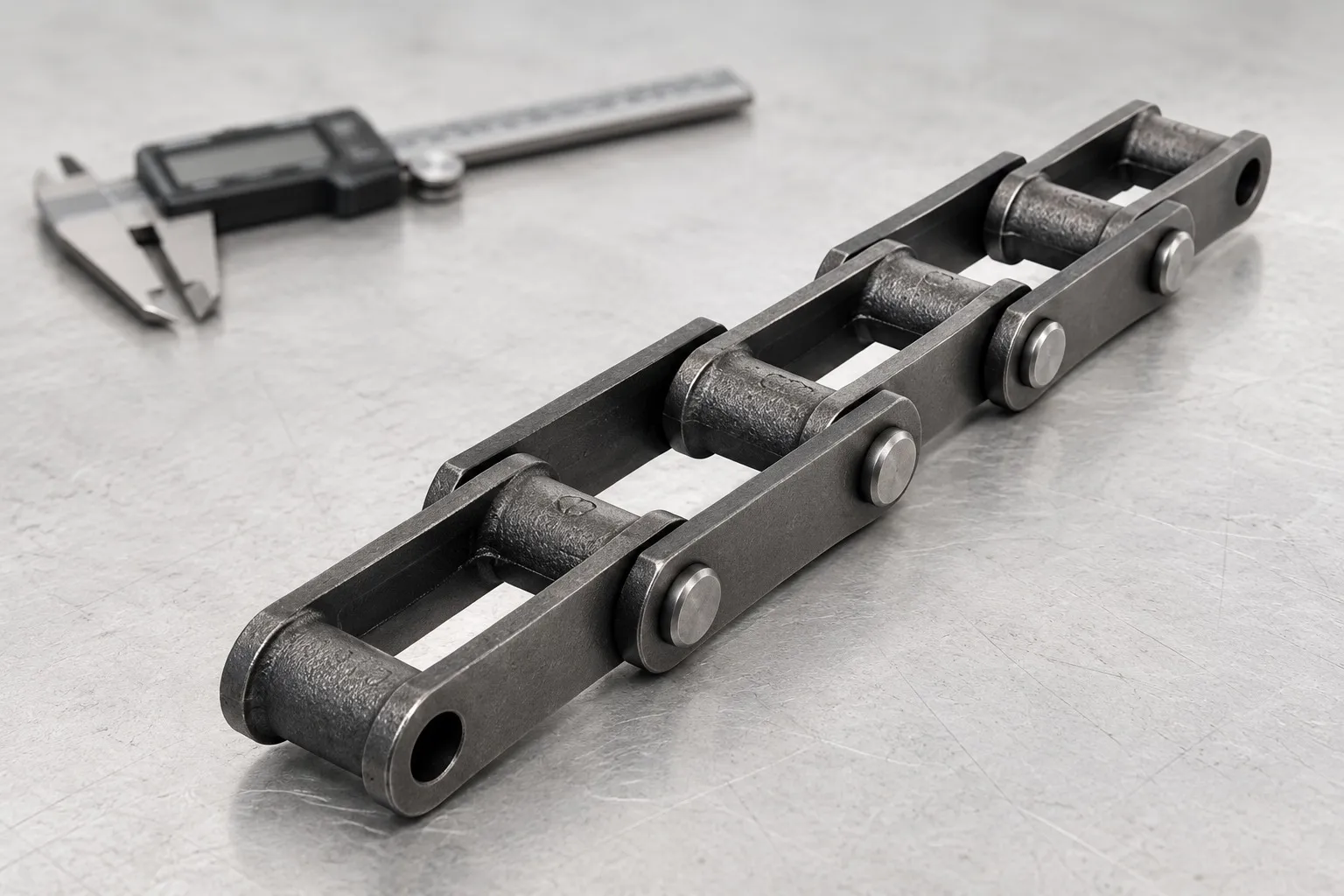
Before ordering replacement C188 conveyor chain, record the condition of the existing assembly and the dimensions that determine fit. A clear record helps distinguish a chain identification problem from wear, alignment or operating issues.
1. Identify the Chain and Preserve a Useful Sample
Record the model marking, conveyor location and the position of the sample within the strand. Photograph the sidebars, block links, pin heads and retention arrangement. Keep an unworn spare or an original drawing if available. A heavily worn section is useful for diagnosing the condition, but it should not be used alone to define new-chain dimensions.
2. Measure Pitch Consistently
The C188 family’s nominal pitch is 66.27 mm. For a practical comparison, measure several consecutive pitches rather than relying on one joint. Record the number of pitch intervals and the measured length. A span covering ten intervals contains eleven pin centre positions; counting pins instead of intervals can produce a large error.
Use the same method and measurement conditions for repeated readings. The difference from the nominal span may indicate wear, but a retirement limit must come from the conveyor or chain manufacturer’s instructions. Do not select an arbitrary percentage and apply it to every C188 installation.
3. Check Joints and Sidebars
Look for stiff articulation, loose retention, displaced pins, damaged sidebar holes and visible cracks. Record whether the condition is isolated or repeats at a particular position. Abrasive contamination around joints, unusual pin movement or uneven contact marks can guide the next inspection, but the visible symptom alone does not prove its cause.
Do not force a damaged joint back into service or treat free articulation as proof of adequate strength. Where damage is suspected, follow the equipment maintenance procedure and have the component evaluated before reuse.
4. Review Sprockets, Guides and Attachments
Check the existing sprocket profile and record its identification and tooth count. Photograph unusual tooth wear and contact patterns. Measure the space available for pin heads and cotters, and review the guides and attachment path for interference. Replacing the chain alone may leave the cause of poor running unresolved.
For conveyors with parallel strands, record how the strands are paired and how attachments connect them. Specify any matching requirement with the replacement order. Avoid mixing old and new sections unless the equipment manufacturer has approved that arrangement.
5. Build a Replacement Inquiry Package
| Item to send | What to record |
|---|---|
| Identification | Model, drawing revision and conveyor location |
| Chain length | Number of strands, link count and units |
| Fit details | Width, pin projection, joint type and attachment layout |
| Operating conditions | Material, speed, moisture, temperature and contamination |
| Inspection evidence | Photographs, measured spans and required records |
See our C188 combination conveyor chain page for the product overview. For replacement review, send TJOND your drawing and inspection notes. Confirm the final assembly and acceptance requirements before ordering.


